
Position
Level Designer – SMU Guildhall
Development Time
16 Weeks | 240 Hours per Person
Team size
14 | 3 Level Designers
Technology
Unreal Engine 4
synopsis
Rhome is a first person, dark, atmospheric exploration game where players navigate an increasingly chaotic and psychologically unnerving environment as the very fabric of reality unravels around you.
trailer
roles and responsibilities
- Designed, scripted, and iterated level 2 of 5 from concept to release
- Implemented and iterated 4 seamless level transition sequences for all levels
- Polished all 5 puzzles in the game with additional haptic, audio, and visual feedback
- Implemented and polished dozens of narrative objects and scripted sequences
- Built flexible tools with blueprint used throughout game for optimizing the construction of impossible spaces
- Collaborated and iterated on programmer built tools for ease of use and further functionality
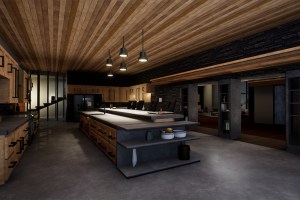
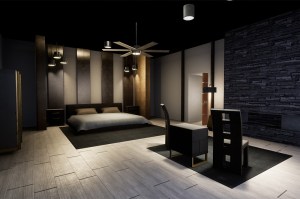
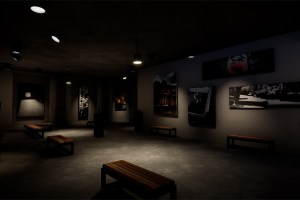
Marketing Screenshots
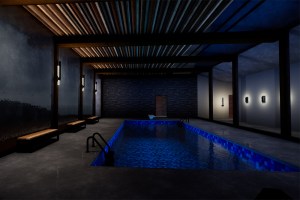
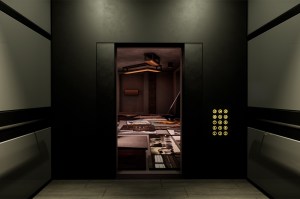
design goals
- Creatively reuse space to defy player expectations
- Build tools to construct impossible spaces
- Seamlessly transition between levels with audiovisual sequences
- Develop intuitive and satisfying puzzles
creatively reuse space to defy player expectations
level layout
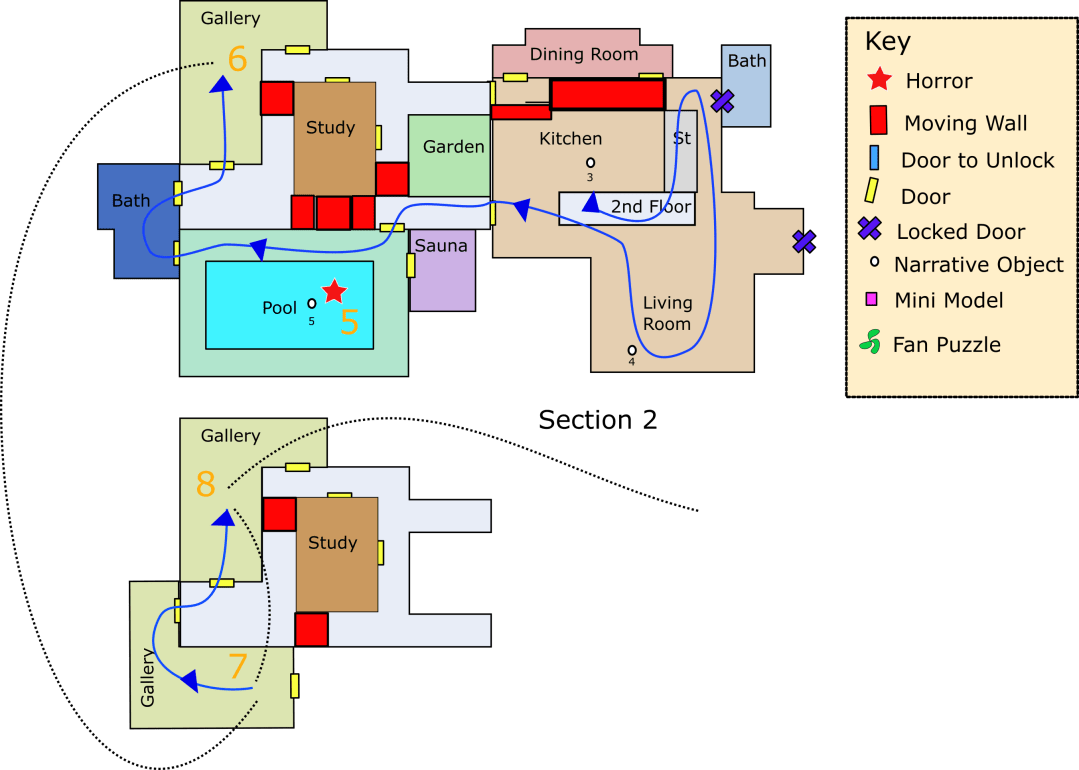
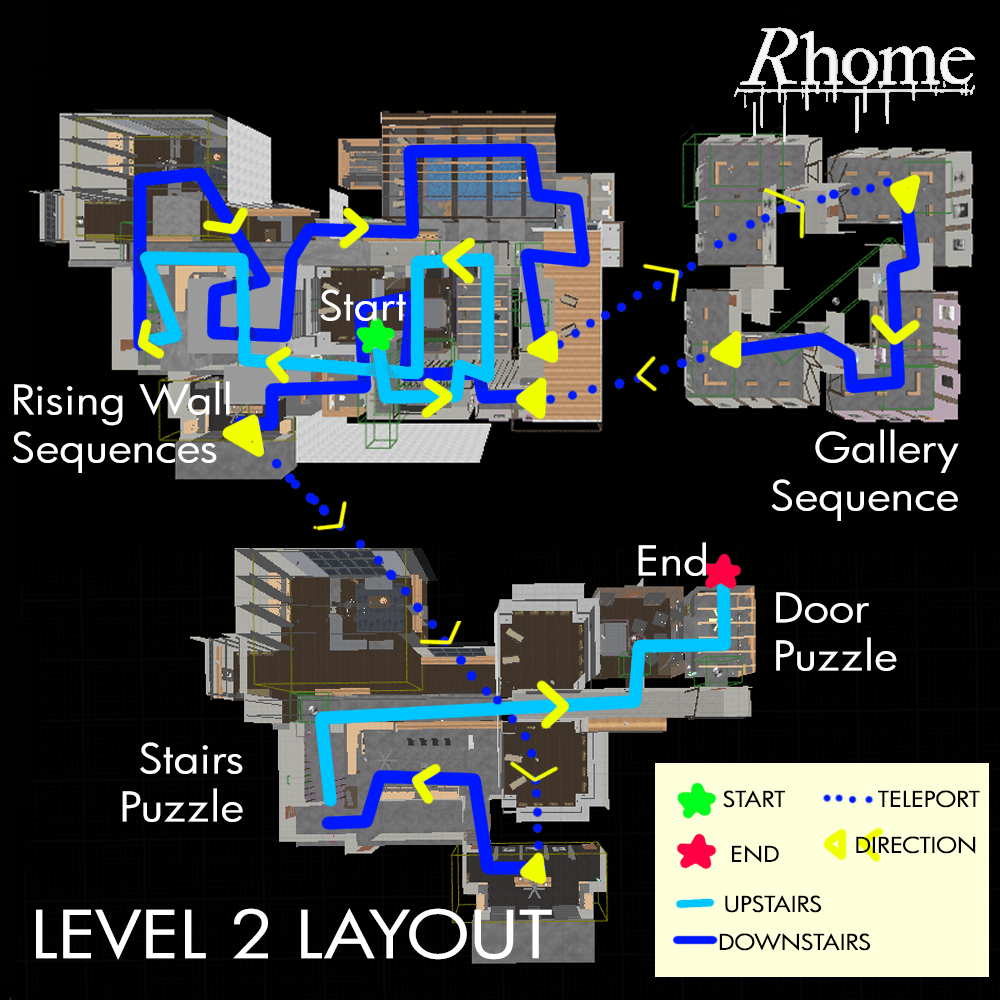
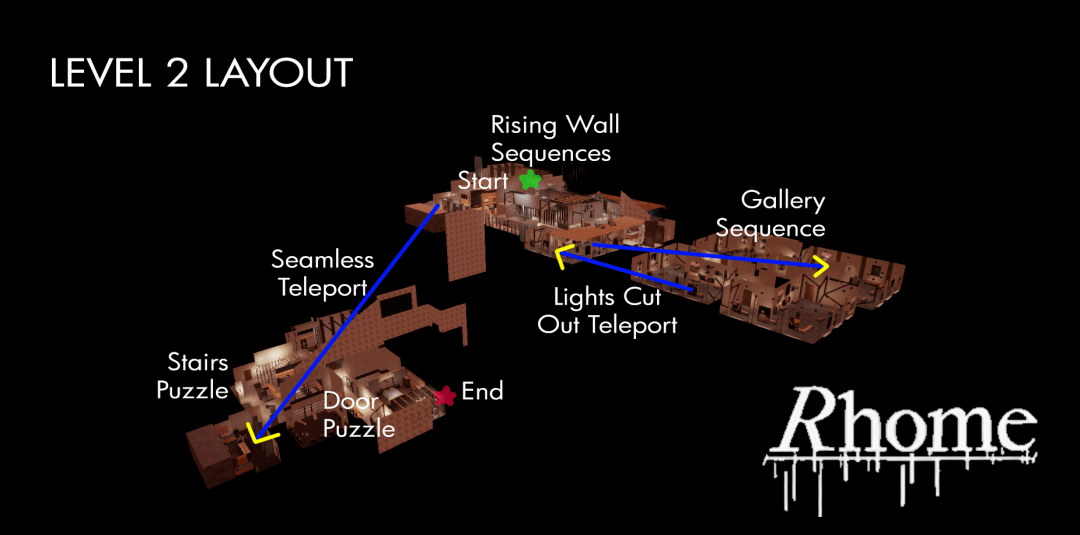
- Within the arc of Rhome, level 2 is the first section of the game where the protagonist’s home begins to shift to represent her unraveling psyche.
- The layout of the level reuses spaces from the previous level in order to create similar feelings of Deja vu and uncanniness that the protagonist experiences at this point in the story
- Rerouting the player through the previous level’s geometry with additional static walls proved ineffective to communicate that the layout of the house was recognizably changing
- The solution to this problem involved replacing the static walls with dynamic walls that rise as the player approaches.
- Once the moving concrete walls were implemented the experience of walking around the same space as before became surprising and better supported the arc of the game.
Gallery Sequence
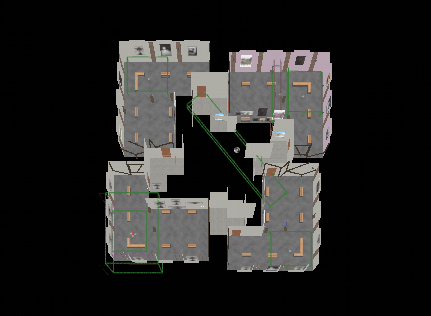
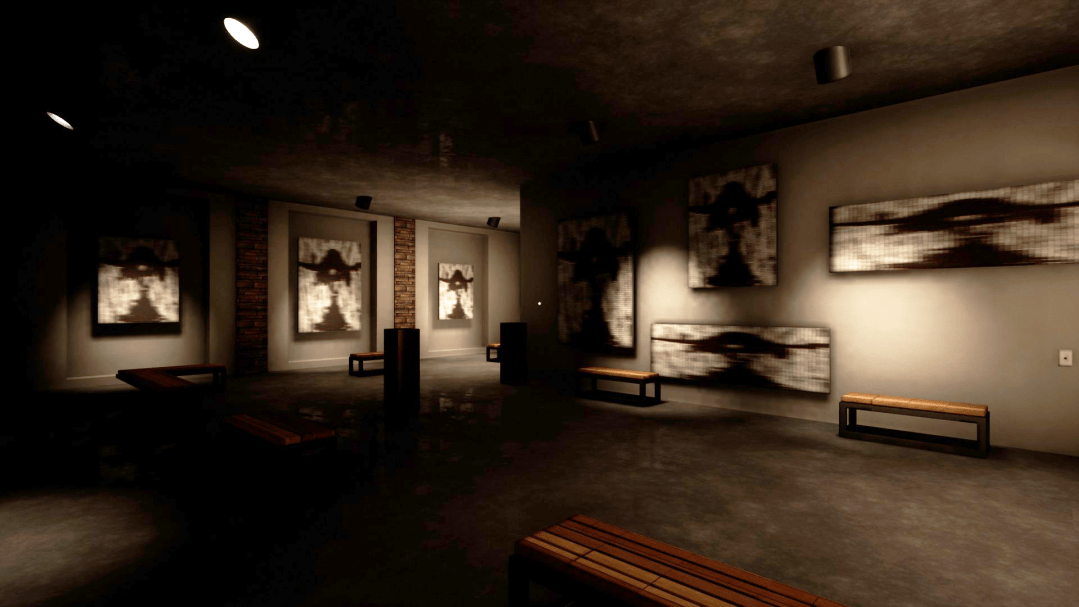
- The gallery sequence was designed as a horror moment built around impossible geometry, offering a moment of high tension in the middle of the level
- The first version of the sequence required players to walk through the same room 5 times before progress was unblocked but the changes in the room were too subtle to let players know they were progressing
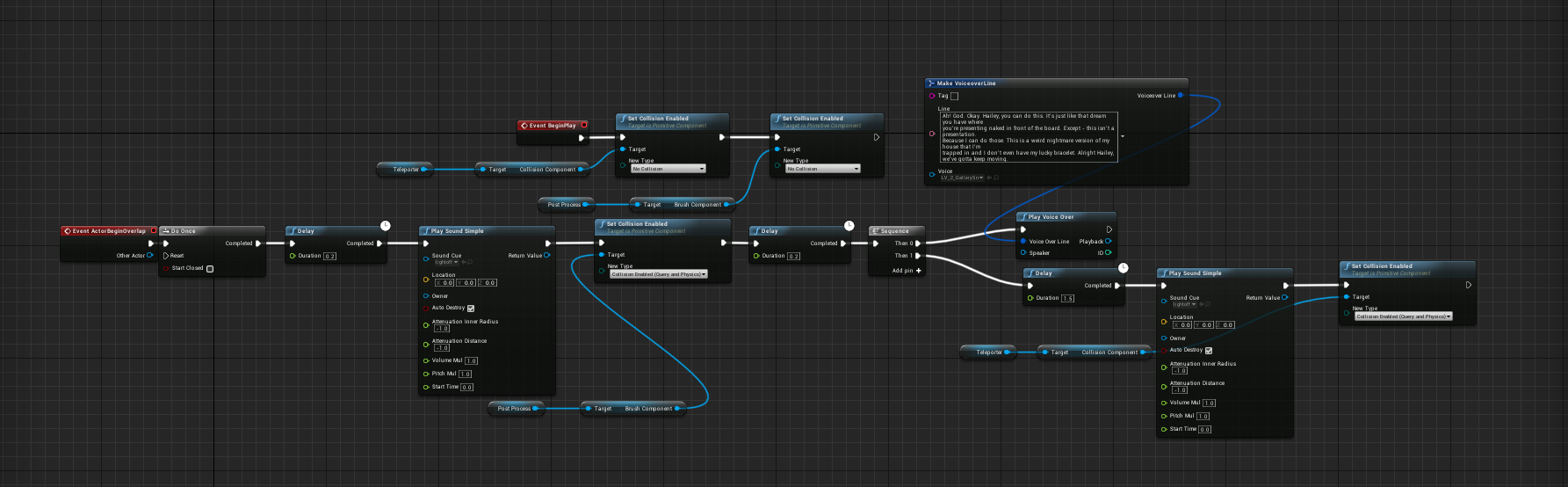
- The final version of the sequence involves multiple teleporters to get players in and out of the loop, a solution that avoids having to develop seamless portal technology. The blueprint for this sequence(seen below) was the first to hide teleports with diegetic lights breaking which became a common tool for future teleporters
- The final version of the sequence is also only 3 “loops” long, with changes in paintings being far more apparent to make forward progress apparent
build tools to construct impossible spaces
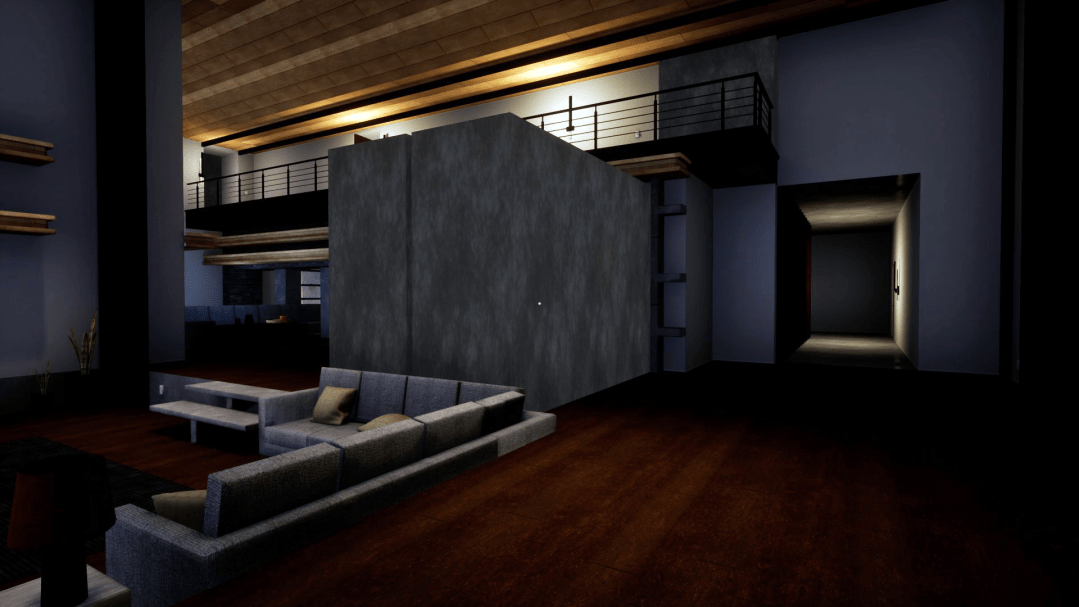
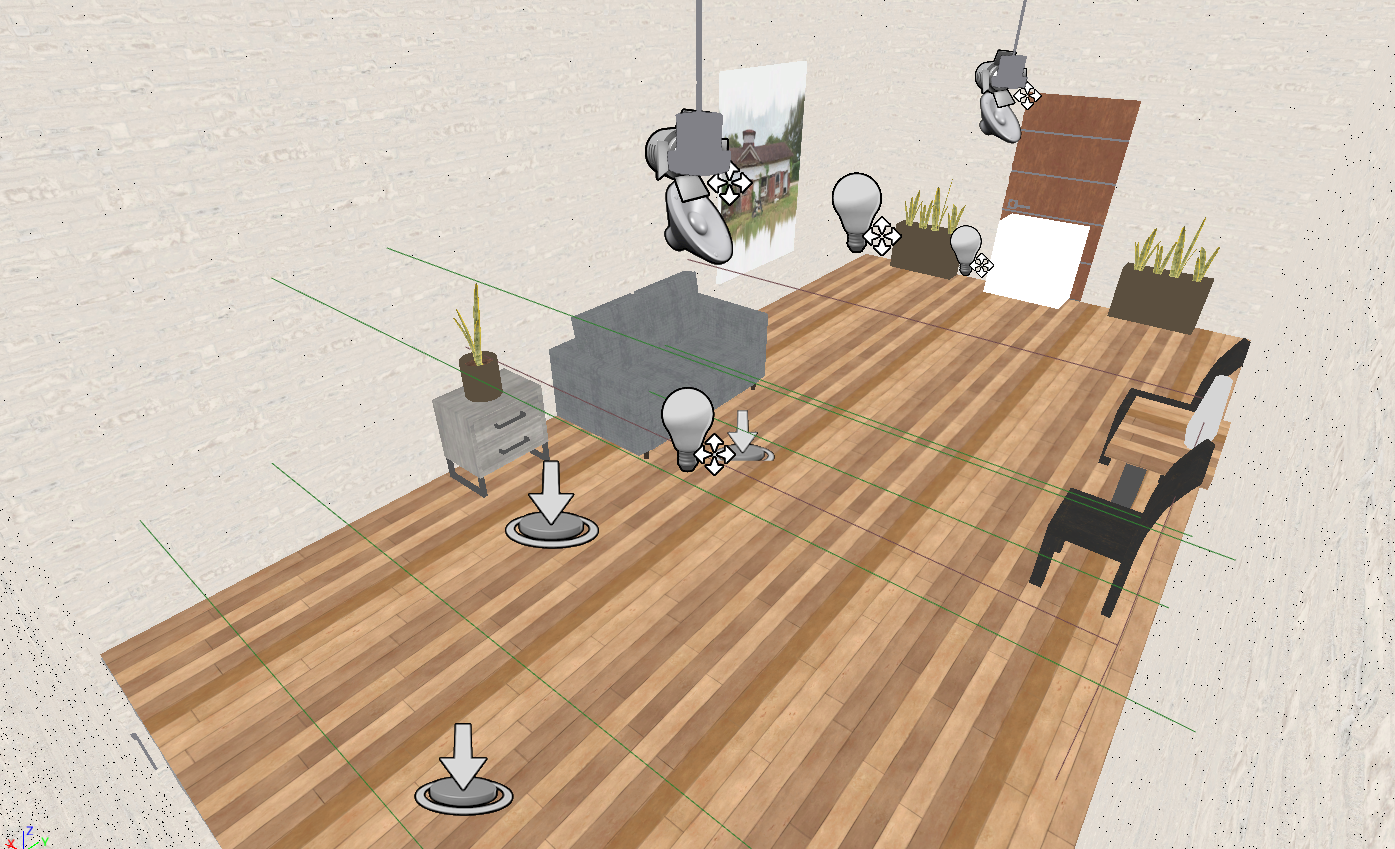
Living Room Moving Walls 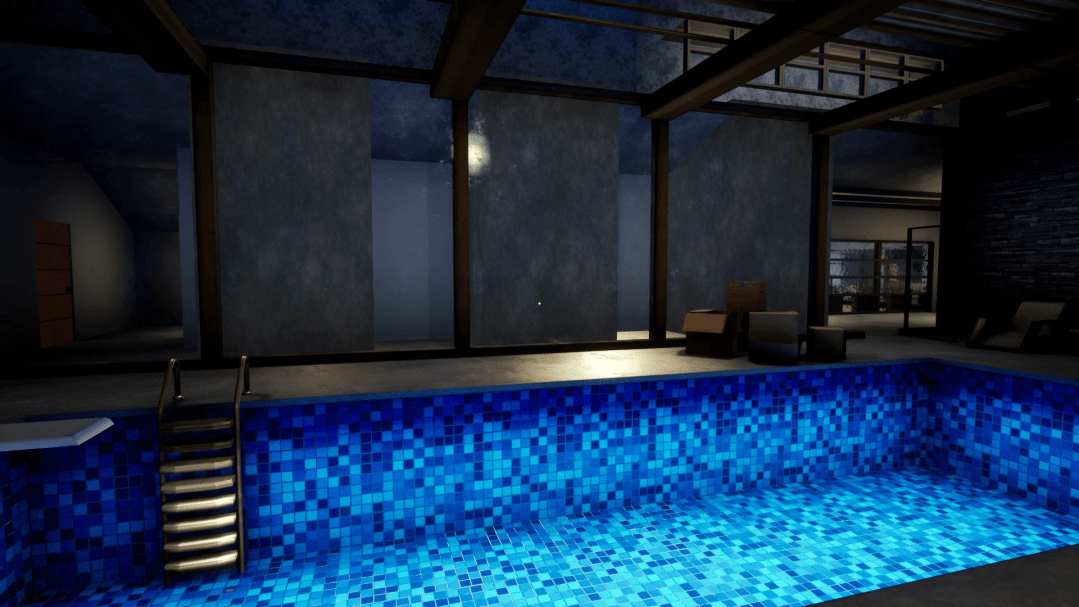
Pool Hallway Walls
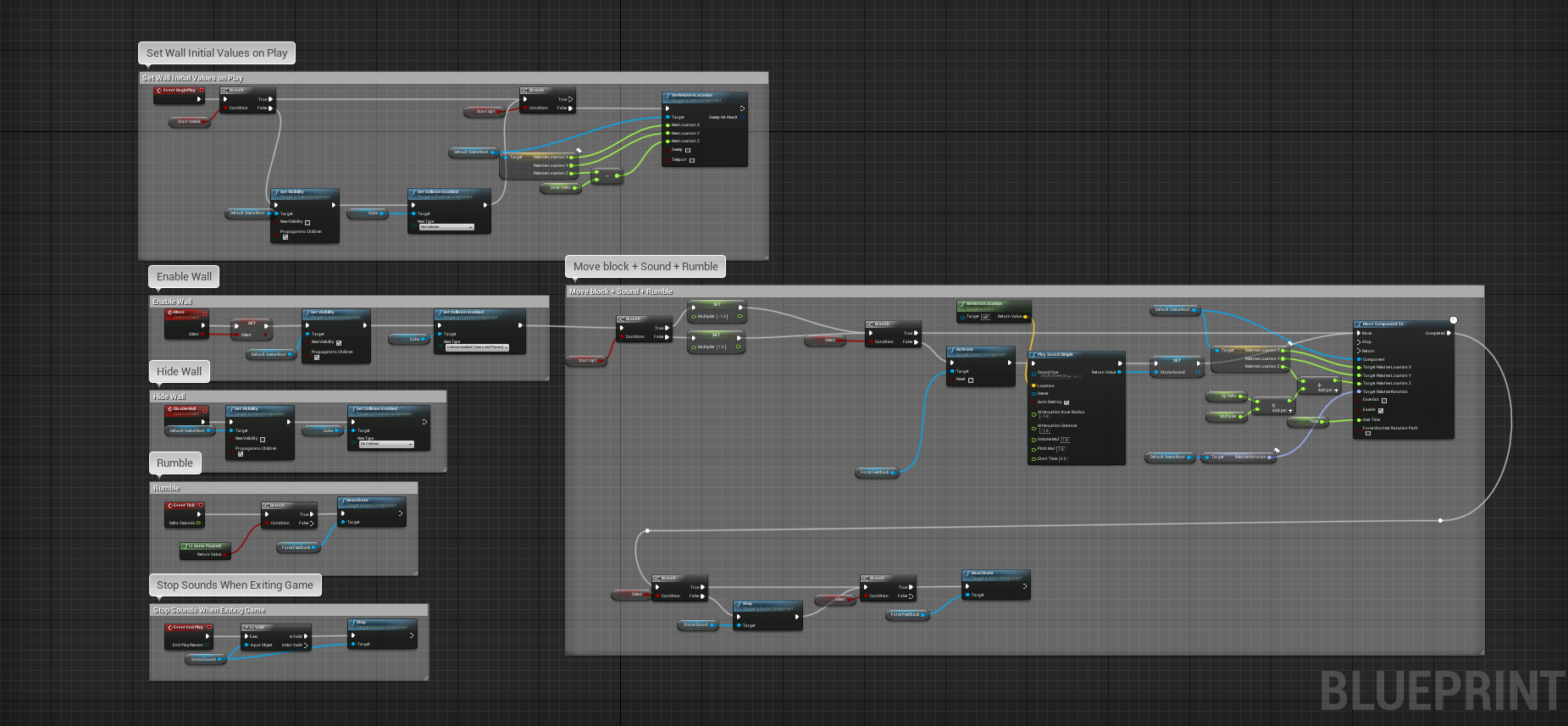
- Key to making the changes in level geometry apparent yet unnerving in level 2 was the moving wall tool
- This tool would go on to be used in all subsequent levels, contributing to the identity of the game as a whole thanks to its easy to use design and its ability to quickly change player flow in interesting ways through a space
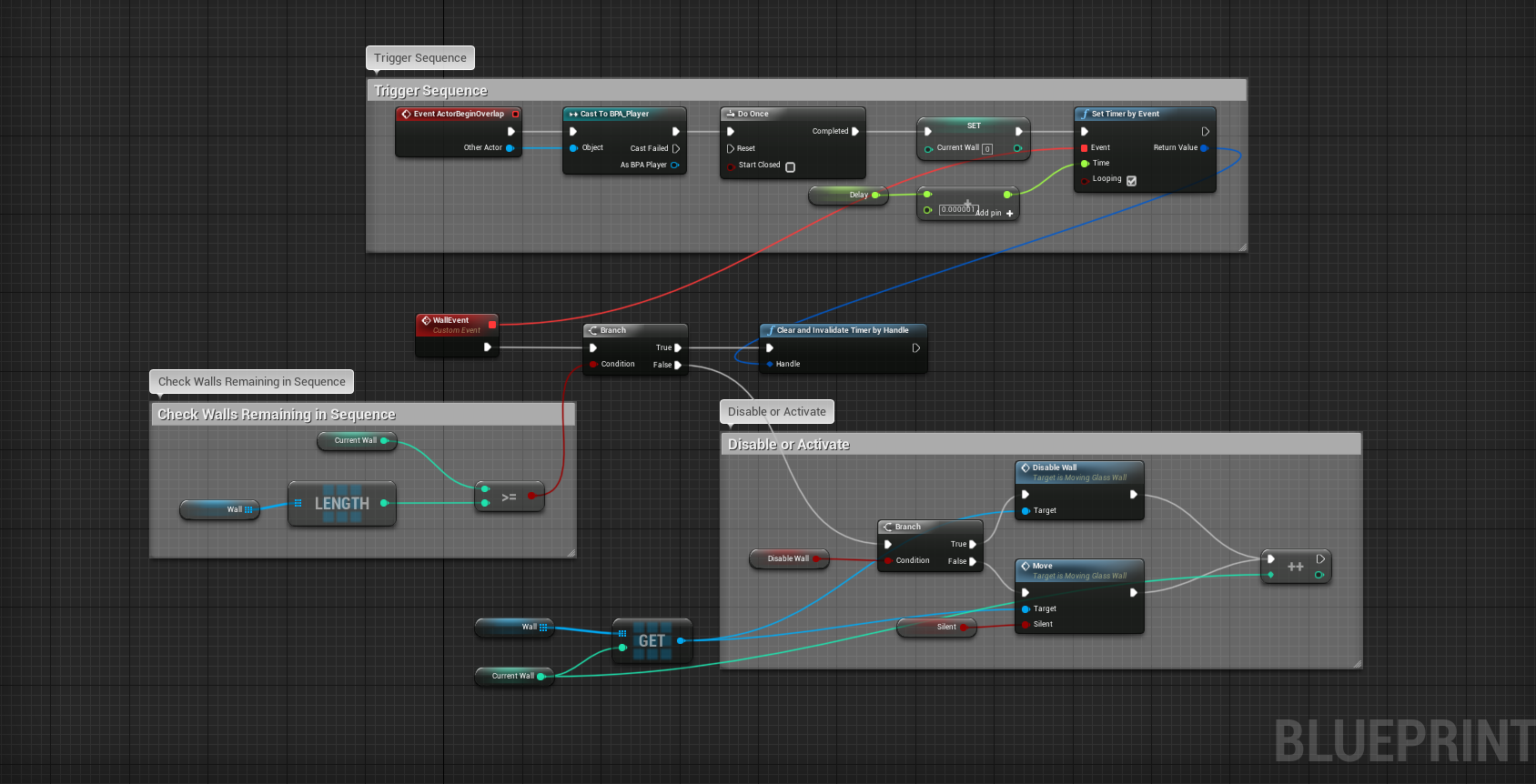
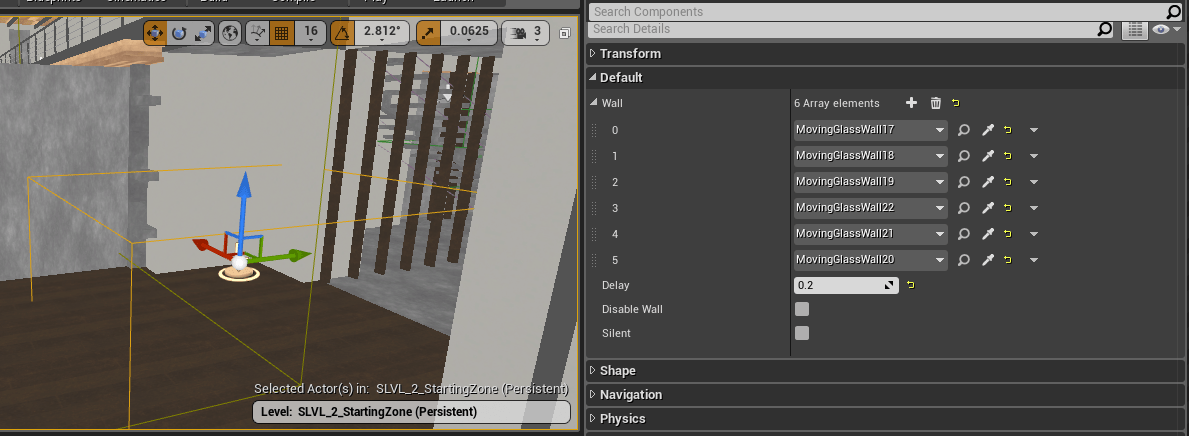
- When entering the trigger box the moving blocks linked to the box are enabled and begin to move.
- If the designer sets a delay, blocks will be called with a designated gap between them.
- A number of patterns of rising and falling blocks can be created based on the order of the blocks in the array, their designated positive or negative delta, and the delay
- The blocks themselves also have their own audio and haptic feedback based on how long they move that can be enabled or disabled on a per block basis.
- This allows for walls to rise behind the player without them knowing to block off areas designers want players to stay out of.
- The versatility and simplicity of this tool set made it one of the fastest and cheapest ways to create interesting flow and surprising moments throughout the title
Seamlessly transition between levels with audiovisual sequences
level transition
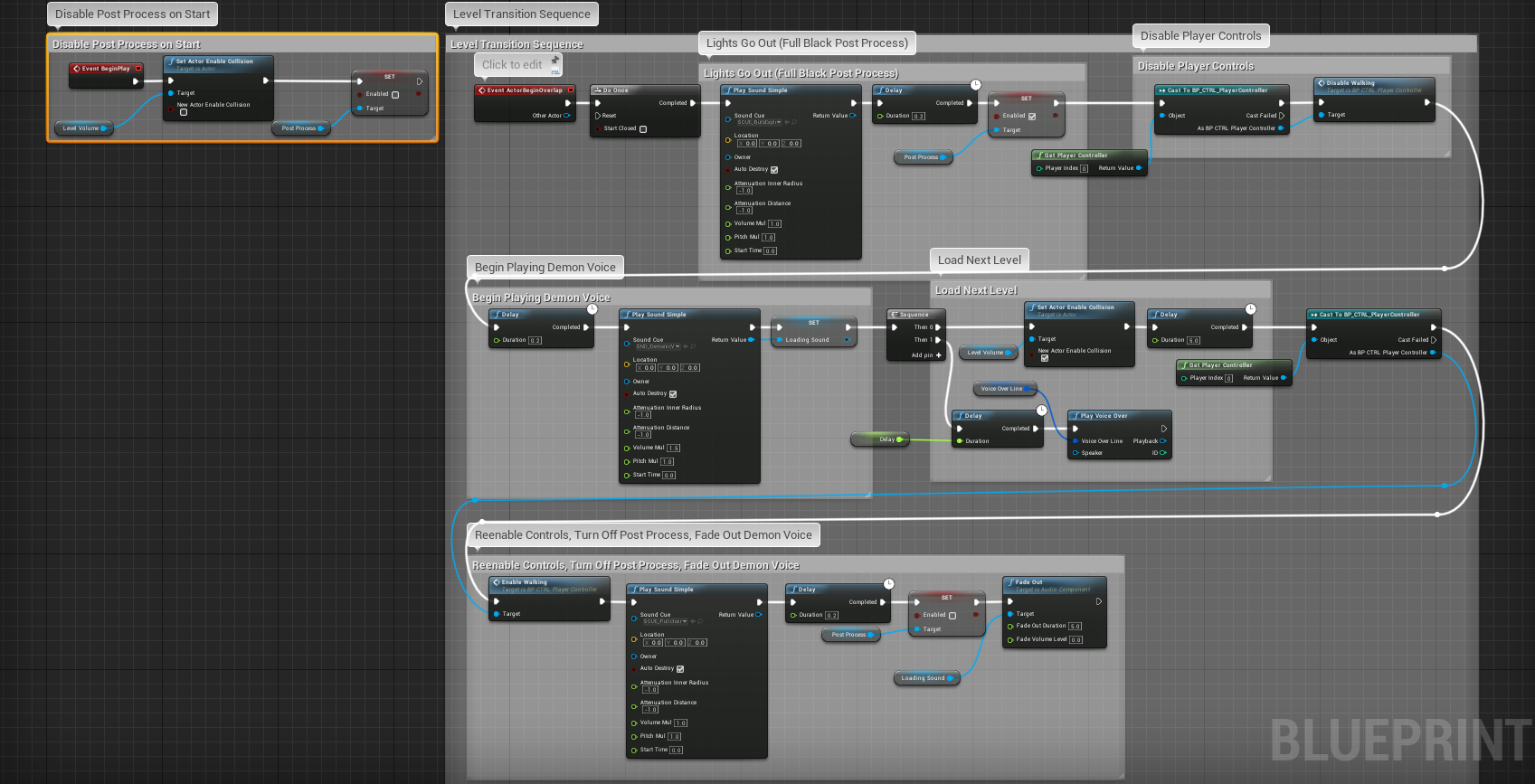
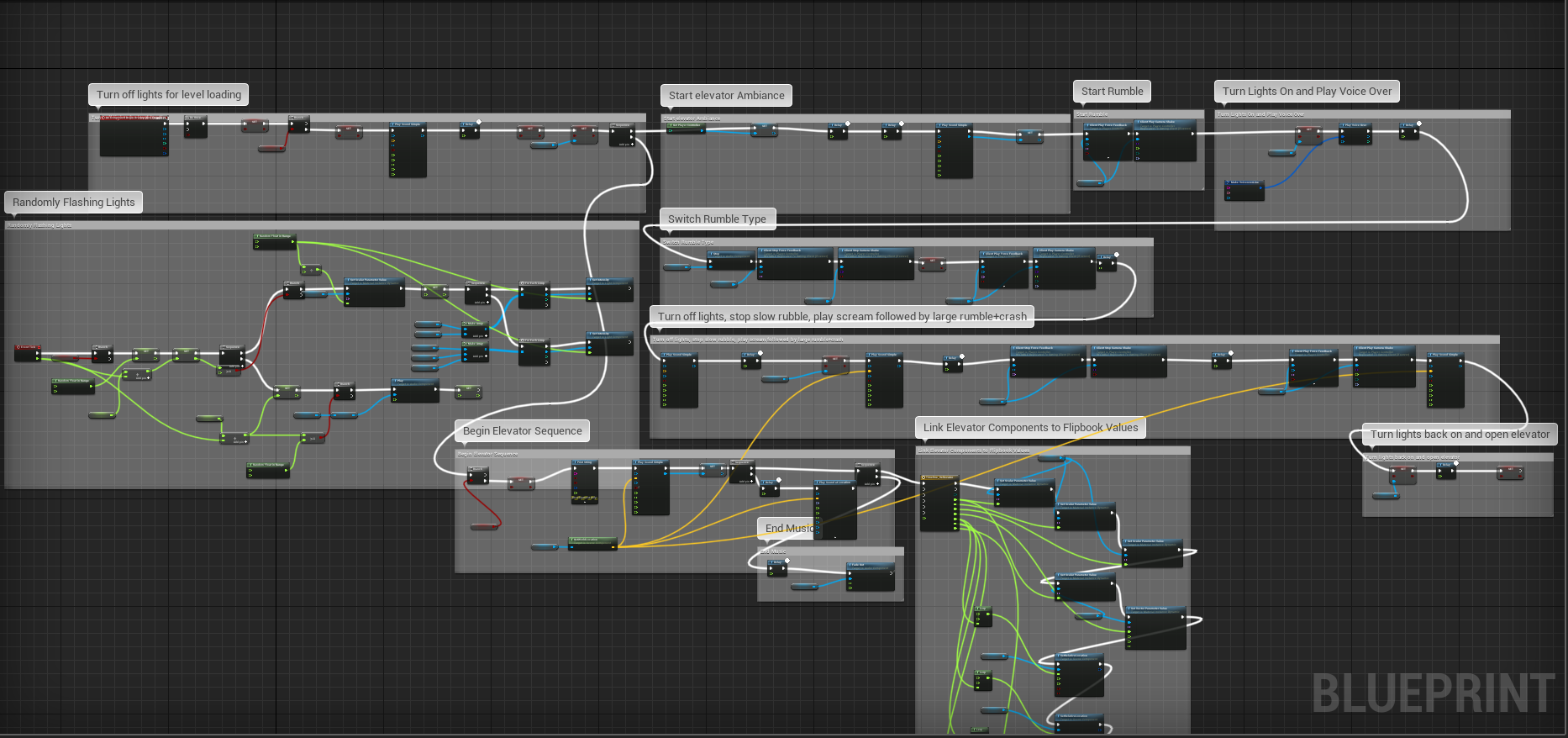
- Rhome is intended to be a seamless experience in which level loading is hidden from the player but our system of hiding and unhiding preloaded levels still led to noticeable hitches
- The solution to this problem was to develop a visual sequence that hides the hitch. Within the generic blueprint for these sequences a post process was added to turn of the lights before the levels were unhidden
- Sounds and voice over were added to the sequence because audio was not affected by the hitch.
- The combination of these two elements within the sequence made it the standard for level loading in the rest of the game.
Hellevator
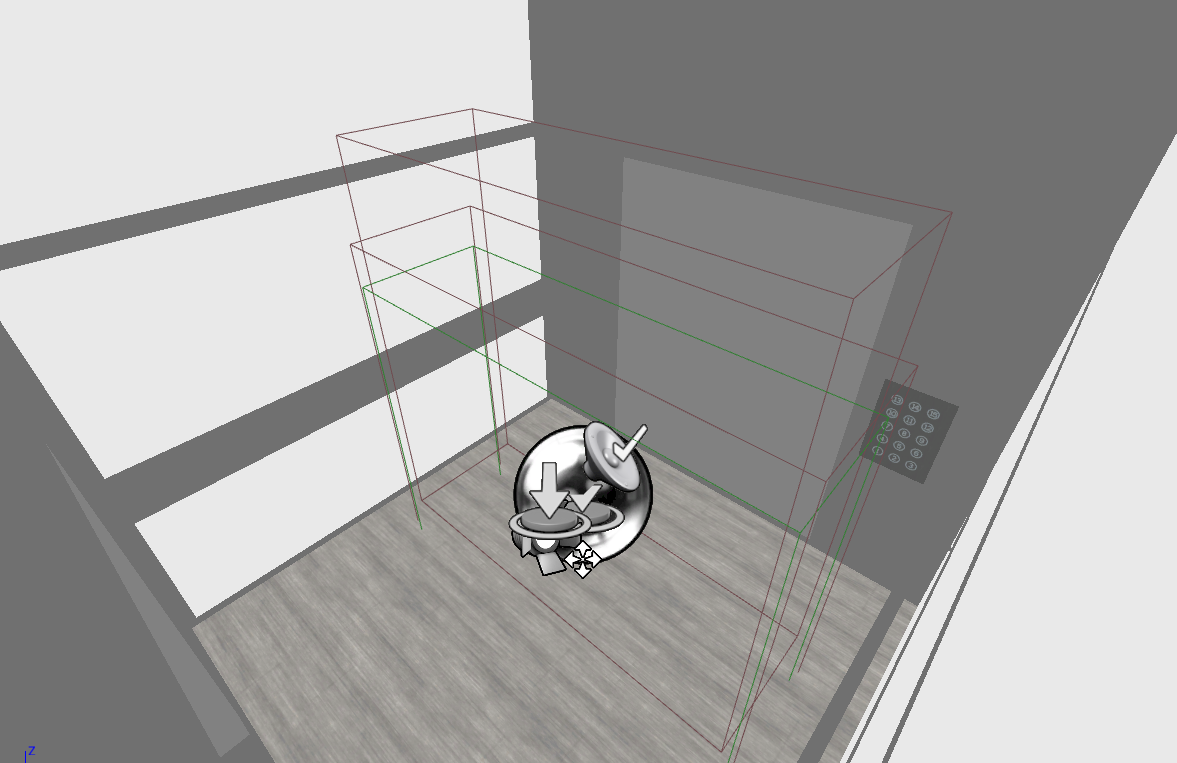
- The most involved level transition within the game is the elevator sequence between levels 4 and 5 labeled lovingly as the “Hellevator”
- The Hellevator needed to both serve as a level transition but also the narrative climax for the game.
- Thematically, the Elevator was intended to convey the protagonist’s fearful final moments by inducing those same feelings in the player.
- Combining the work of an artist’s flip book animations with the assistance of a programmer this final transition both surprises players and obscures the intense hitching behind the scenes with audio, visual, and haptic feedback.
develop intuitive and satisfying puzzles
stairs puzzle
Stairs Puzzle Unsolved 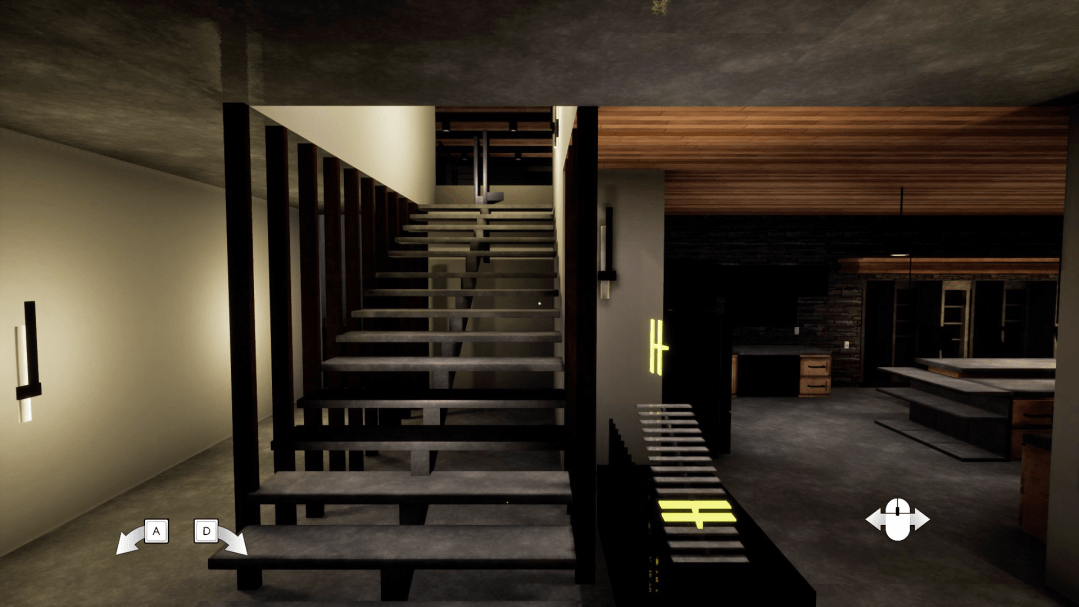
Stair Puzzle Mid Solve
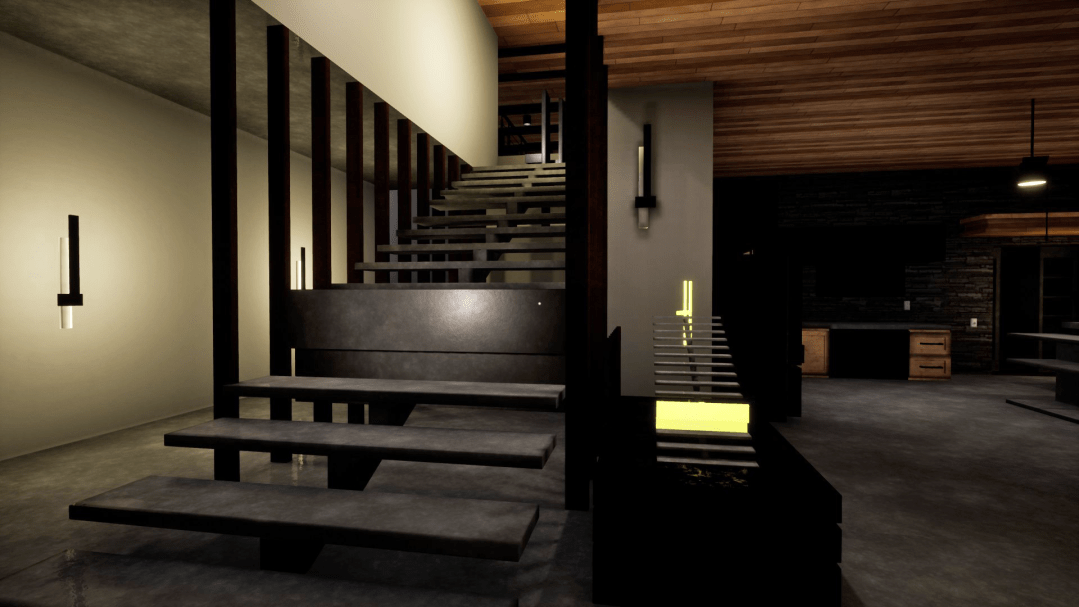
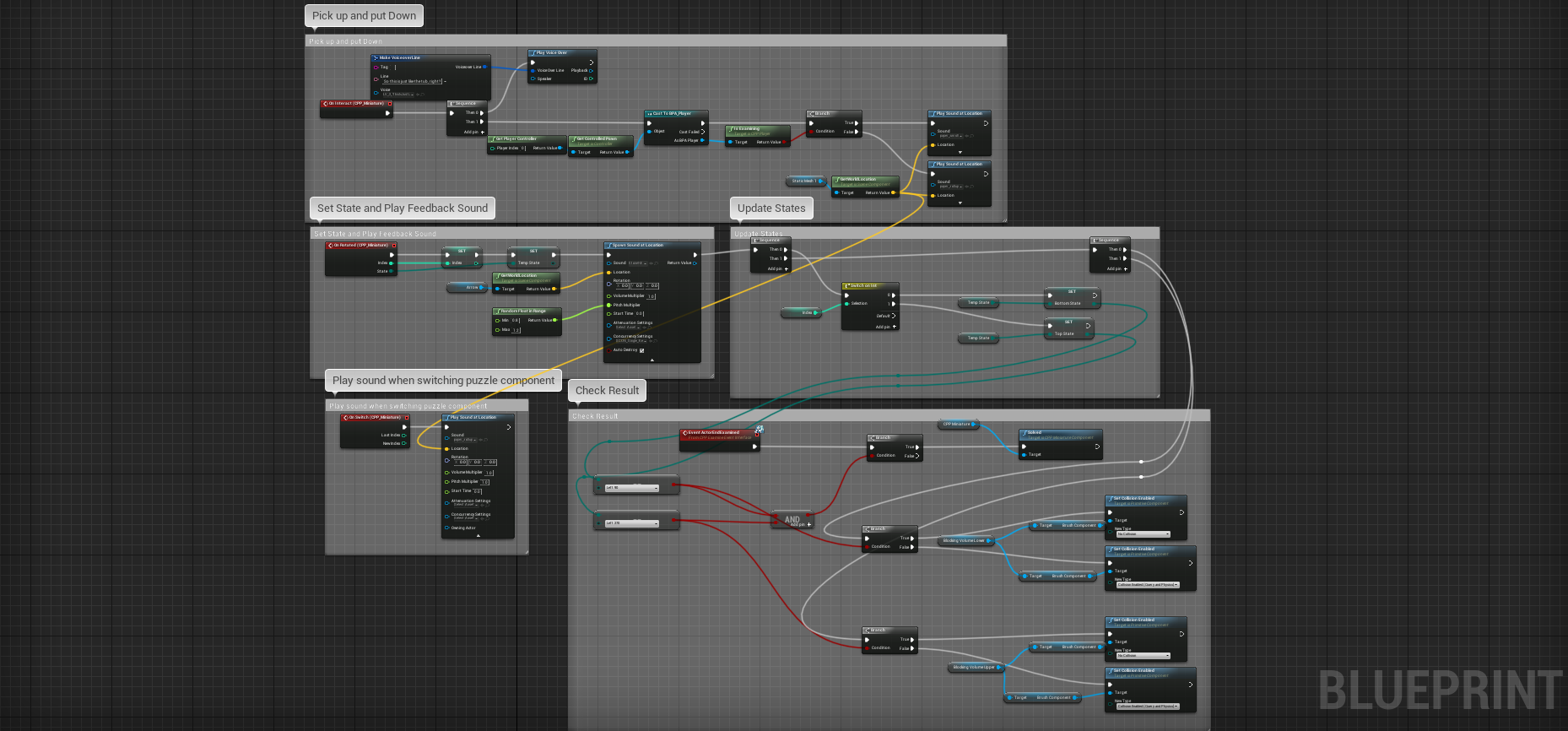
- Programmers on the team engineered a system for puzzles in which players manipulate a miniature model of an item in the world that also manipulates the larger object nearby
- The stairs puzzle in level 2 both teaches a key mechanic to game while at the same time showing an increased supernatural influence in the protagonist’s home.
- Players who come upon the stair rearrangement puzzle quickly understand the goal of making the staircase climbable. Using the affordance of stairs requires very little explanation for most players making it a great introduction to the miniature model mechanic
- Key to the puzzle is the view the player sees of the puzzle space when they enter the interface as well as the sound effects and voice over that cue when interacting with the puzzle
- A final bit of polish comes from the puzzle locking down once a player has correctly oriented the two stairs
spinning door puzzle
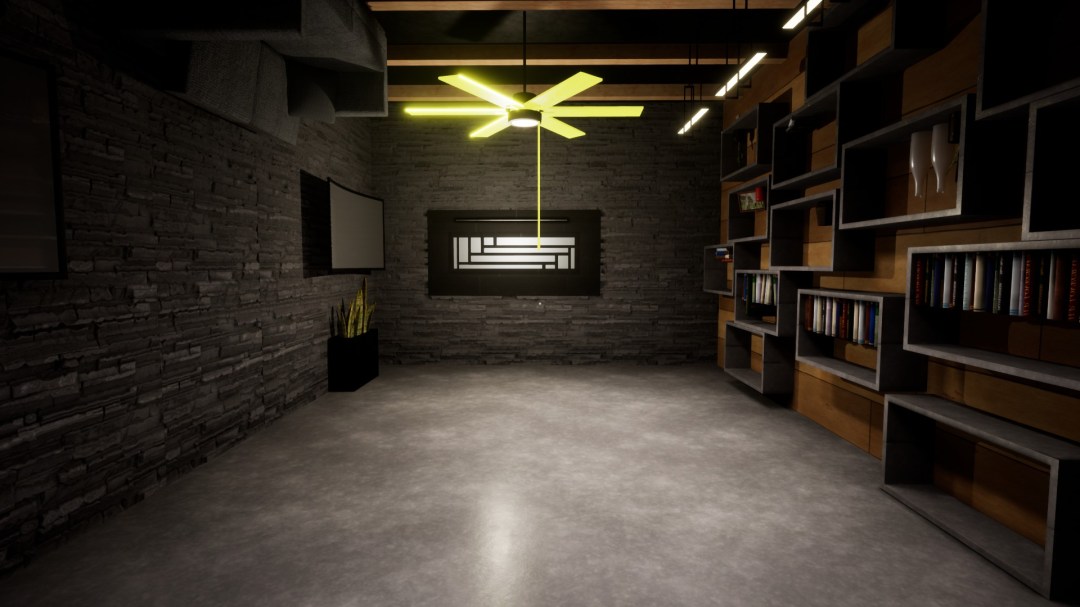
Door Puzzle Unsolved 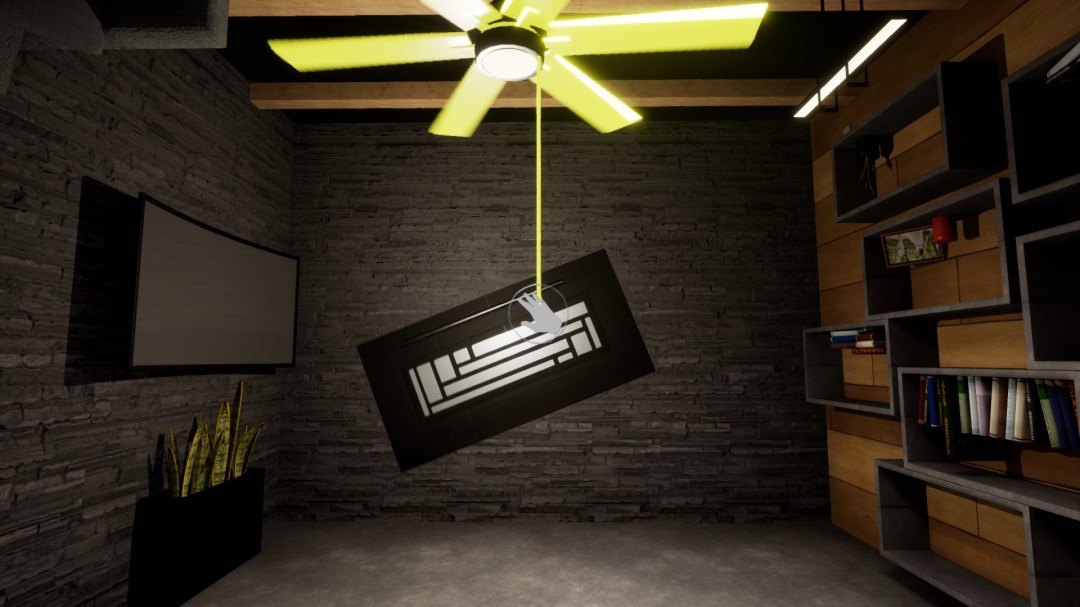
Door Puzzle Mid Solve 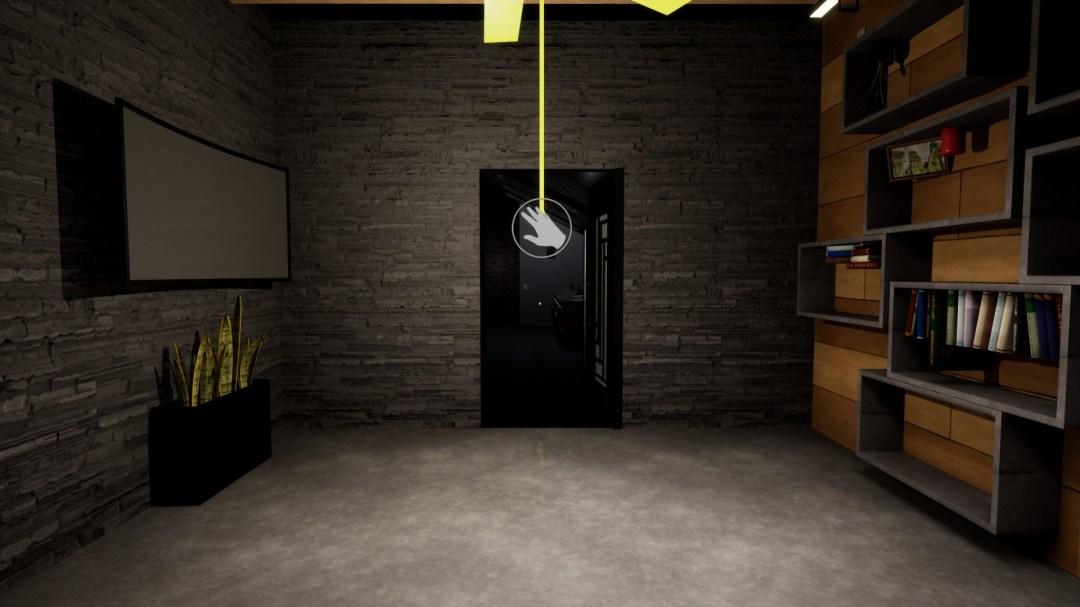
Door Puzzle Solved
- The second puzzle in level 2 serves as the first introduction to the fan interface puzzle and represents a gateway to the increasingly bizarre and frightening locations in the next section of the game.
- When players pull the fan switch an object in the world begins to spin up to a max speed. If the player pulls the switch again the spinning object will decelerate until it stops. The focus of the puzzle is on knowing where to stop the rotating object
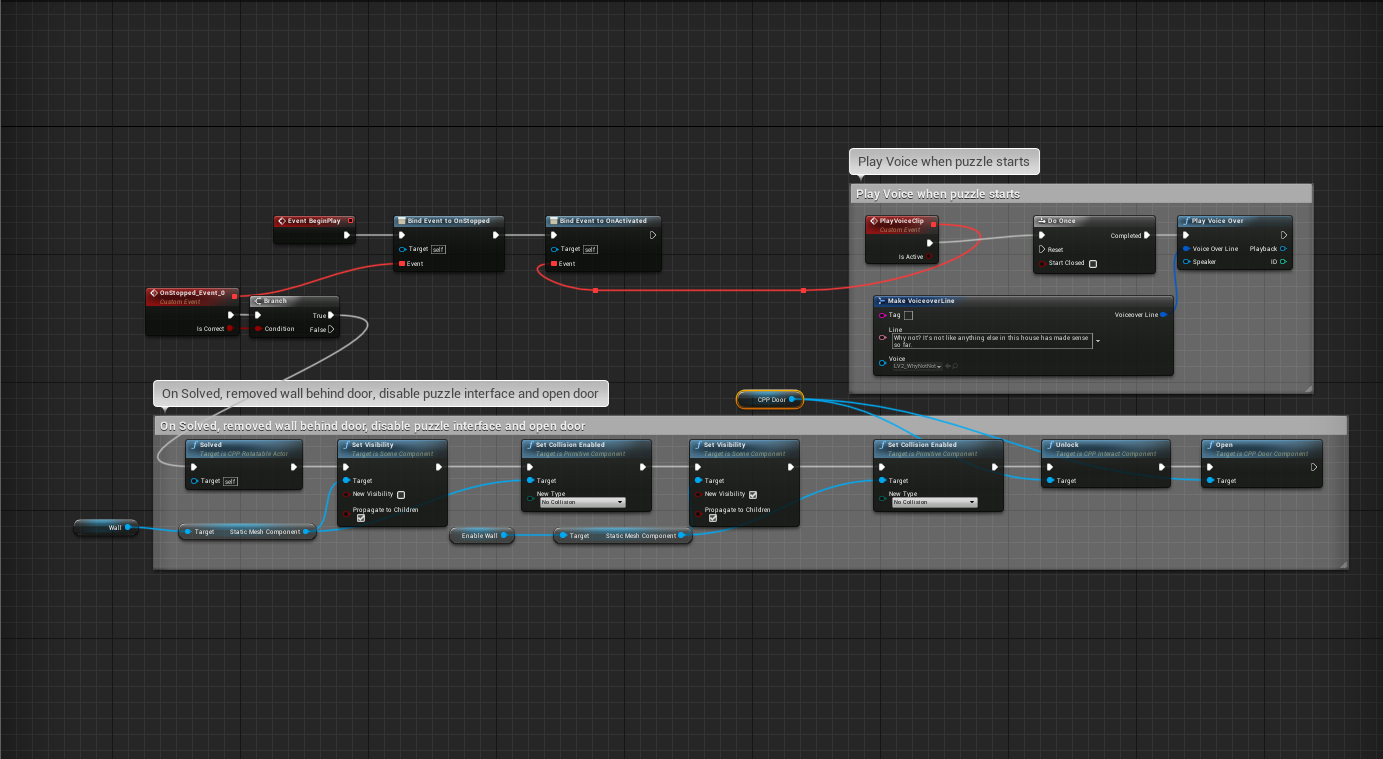
- Once the player lines up the door correctly with the wall its blueprint has it both unlock and open revealing a new path.
- Early versions of the puzzle merely unlocked the door on completion, the door not opening meaning players were unclear if they had solved the puzzle
level playthrough
Post mortem
what when well
- Strong Collaboration between programmers and designers enabled quick prototyping and iteration
- Dedicated, ambitious, and detail oriented team
- Team had well rounded designers with technical chops able to develop narrative sequences
- Learned the level linking system in and out allowing for quick rearrangement of level sections for optimization
what went wrong
- Level design pipeline for rebuilding rooms from previous levels was time consuming
- Puzzle interfaces weren’t settled on until first playable making finding the fun a challenge
- Narrative was not set in stone early enough to incorporate into level designs
- Team communication on known issue and game direction was often lacking
- Seamless level loading was not tested enough, requiring many man hours hiding hitches and connecting levels
- Lighting pipeline led to inconsistent lighting as well as lighting data corruption
even better if
- Making repeated rooms into blueprints to allow automatic updates for each iteration of a room
- Planning out the size of each streaming level to reduce hitching during level hiding/unhiding
- Reusing spaces when possible rather than rebuilding them
- Puzzles were more plentiful within the game design once the team understood their value
 Austin Merritt