

Position
Level Designer – SMU Guildhall
Development Time
12 Weeks ~ 175 Hours per Person
Team size
4 Level Designers
Technology
Hammer Level Editor
synopsis
Mall of The Dead was the #1 most popular map for the month of January 2020 on gamemaps.com garnering over 20,000 views across all platforms
Mall of The Dead is a 4 level campaign for Left 4 Dead in which survivors make their way to the roof of a mall to escape the zombie apocalypses.
Along the way players move from the parking garages to an abandoned department store before heading to the food court for rooftop access.
Key Features:
- 2 custom scripted panic events
- A fully functioning rooftop finale
- Consistent theming and visuals between all levels
department store screenshots


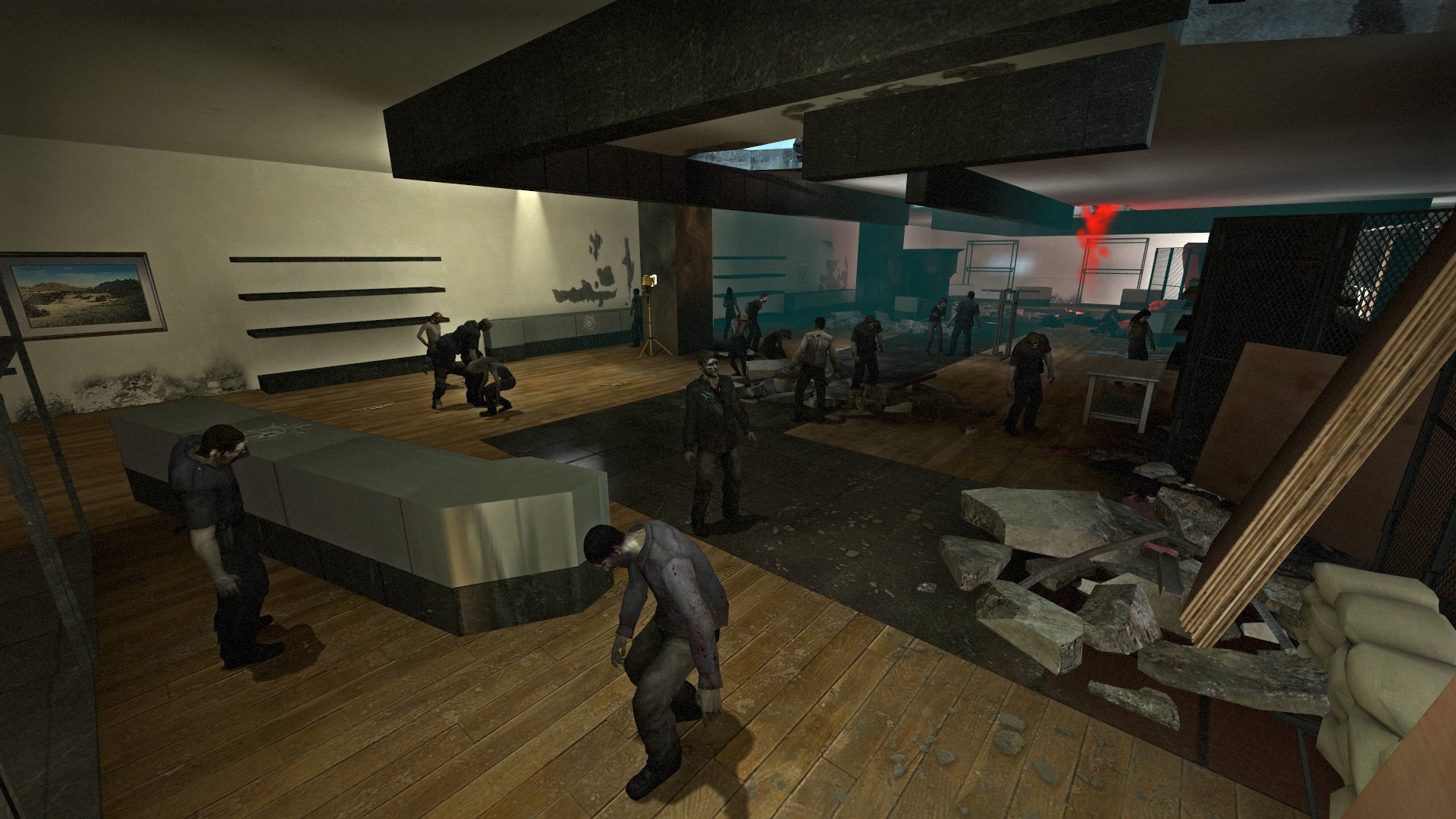

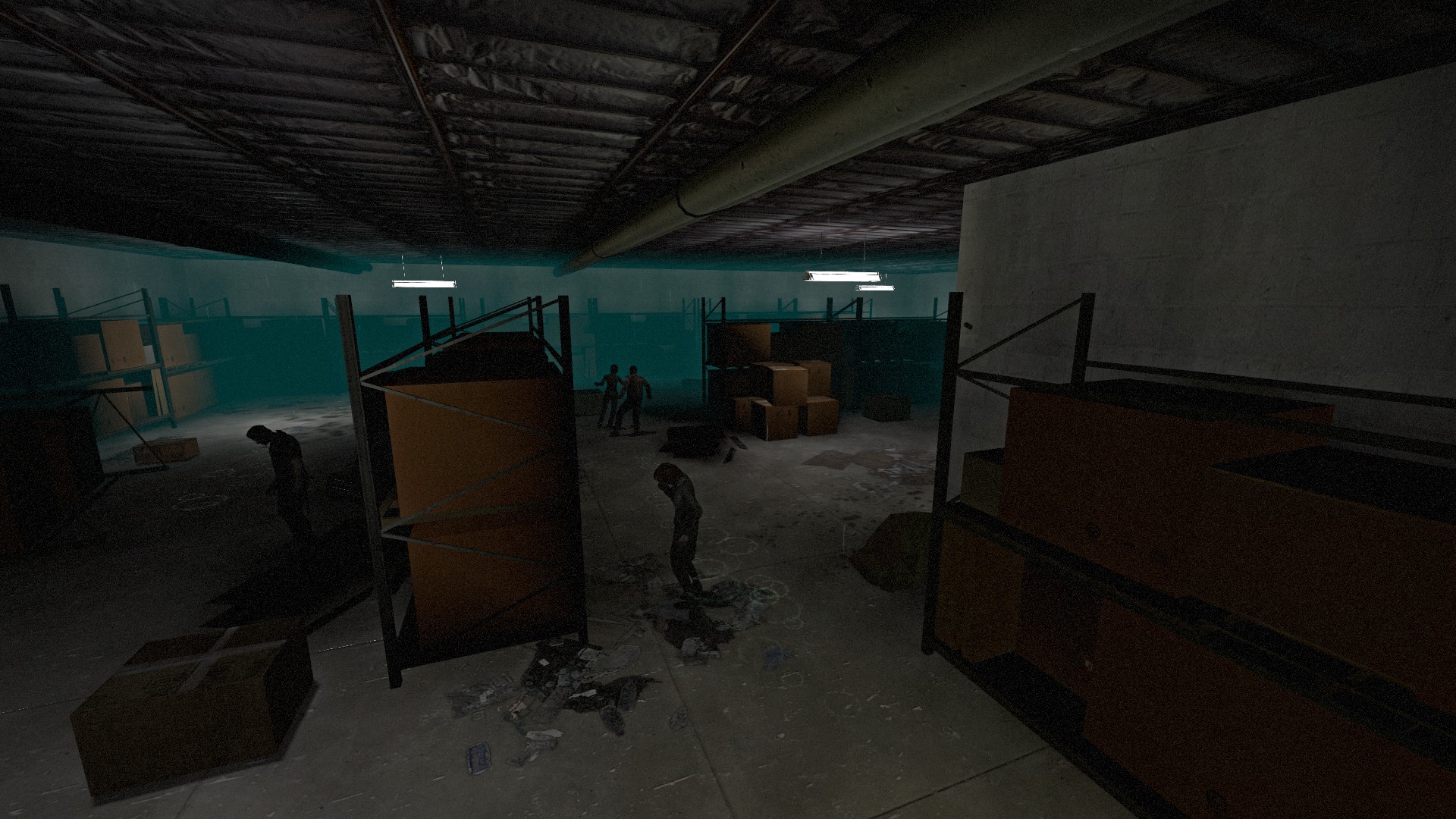
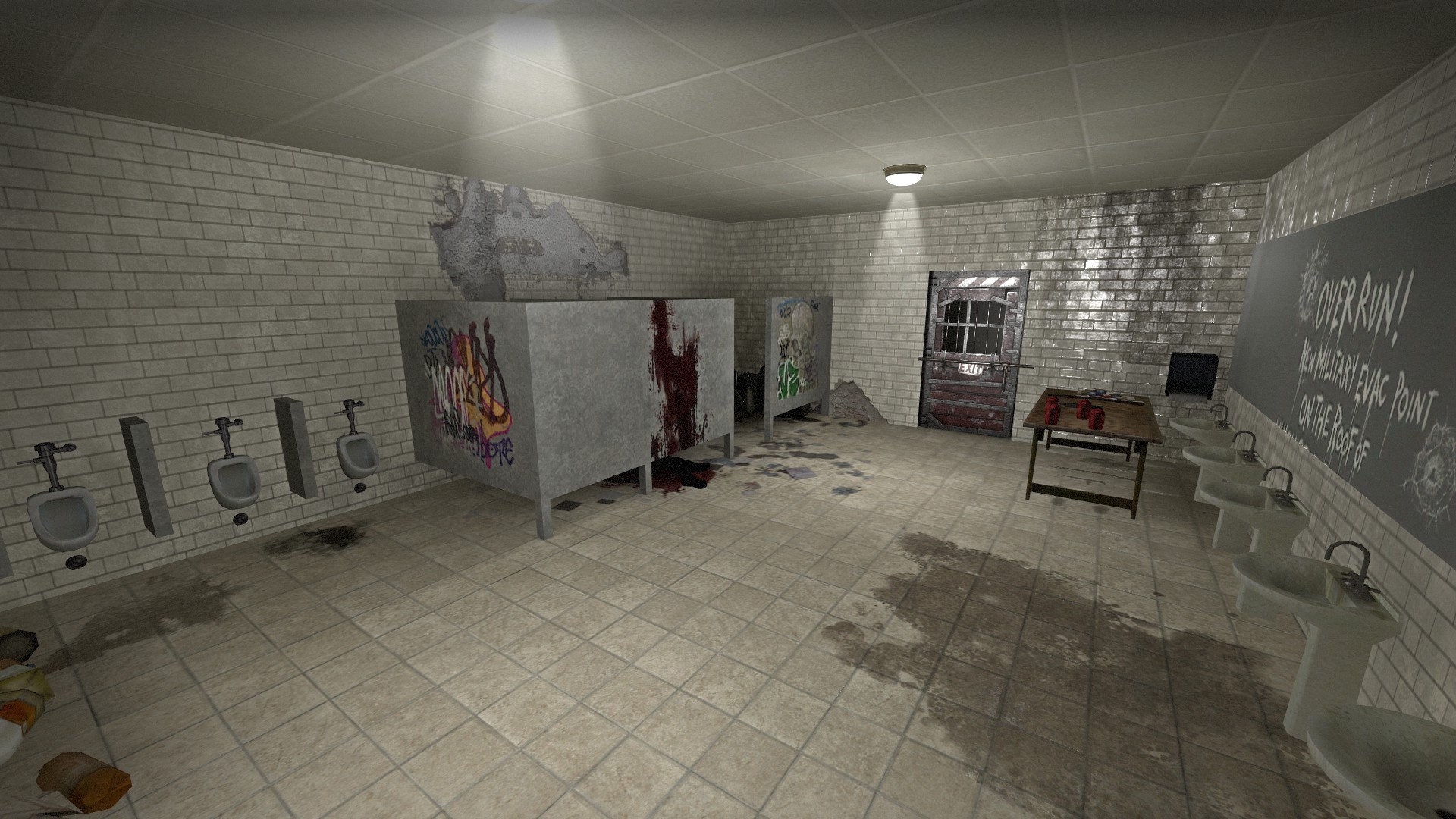
department store playthrough
design goals
- Create interesting flow within a single location
- Script a unique & thematic panic event
- Reward player exploration with clever secrets & environmental stories
create interesting flow within a single location
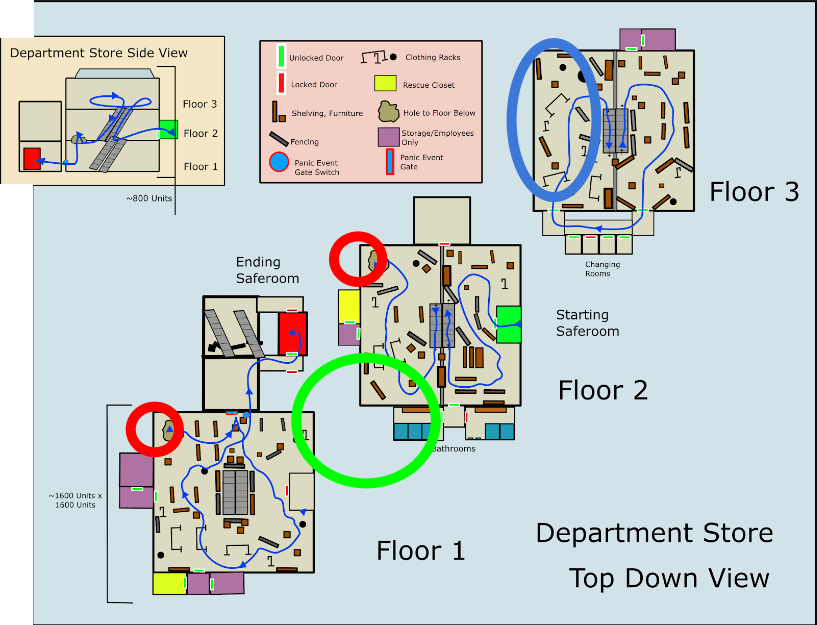
- Initial Concept:
- Contained in a single location
- Large focus on verticality
- Panic Event on Bottom Floor
- Changes From Initial Design:
- RED: Falling through hole removed in favor of going down escalator
- GREEN: Critical path given detour through break room+storage area
- BLUE: Holes in ceiling of third floor for zombie spawning

Gameplay Complete Milestone 
Aesthetics Complete Milestone
- Dev textures were used for the majority of development demanding that the geometry itself captured the department store environment
- The addition of aesthetics brought new layers of player guidance, such as music emanating from speakers, particle effects, and flickering lights making the intended player path natural and interesting to follow
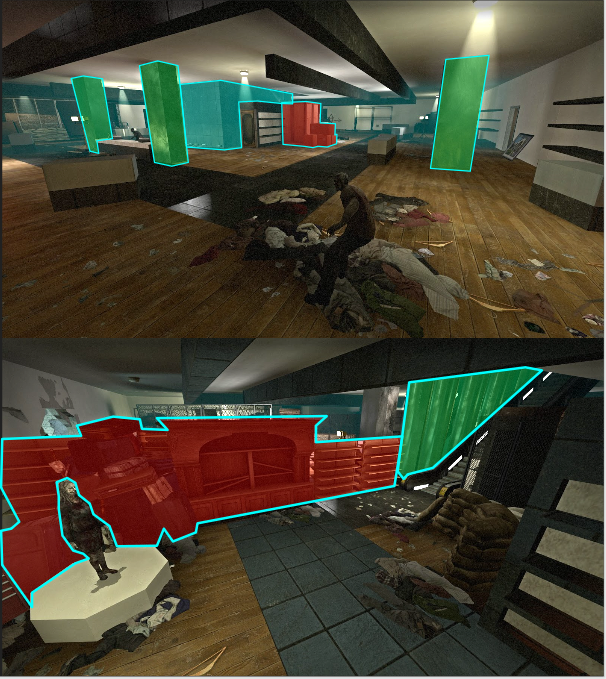
- Department Stores are large open squares requiring clever sight and path blocking to enable satisfying infected spawning, create interesting flow while also contributing to a realistic environment
- GREEN: Department Store Architecture
- Support Columns
- Walls
- Storage Shelving
- RED: Post Apocalypse Barricading
- Shelves
- Police barricades
- Boards
- Furniture

Men’s Bathroom 
Inventory Room
- Whitebox playtests revealed that the critical path’s lack of landmarks made it difficult for players to find their way forward
- Addition sections were added to the play space in the second half of the level to break up the department store floor environment with memorable landmarks that pull survivors through the level
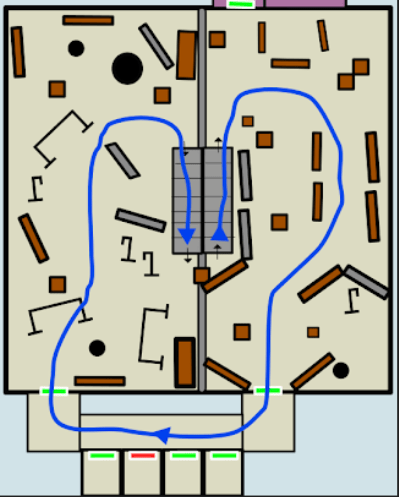
3rd Floor Digital Map 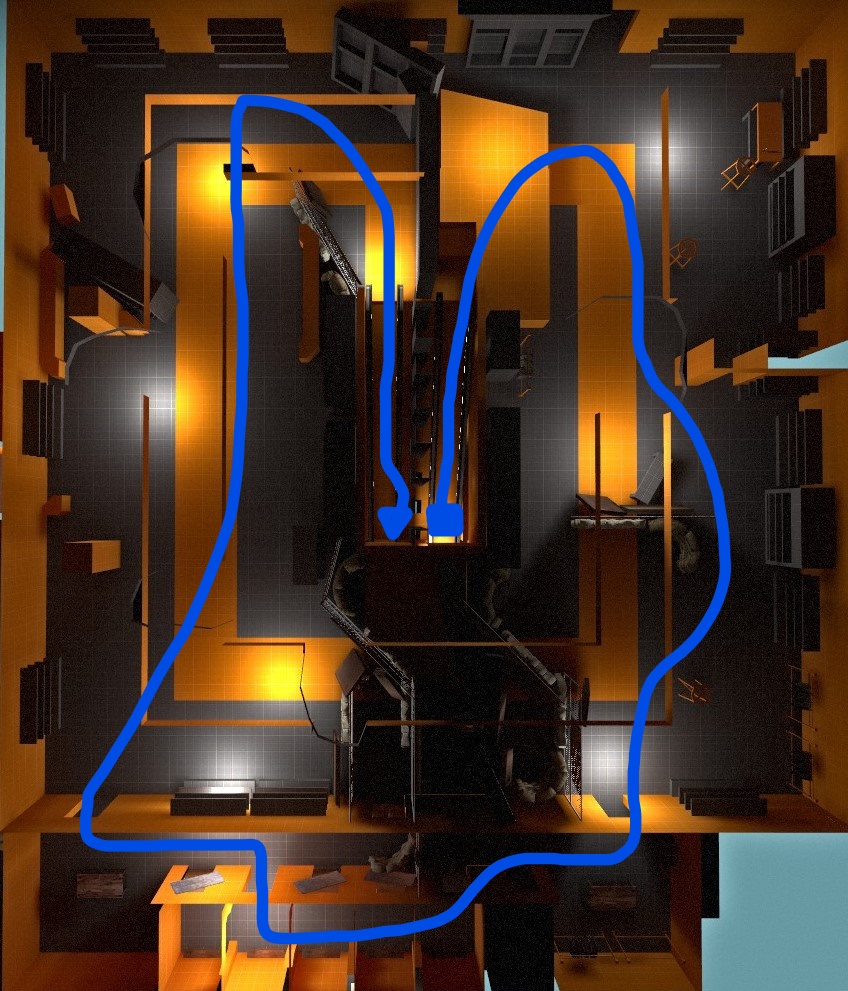
3rd Floor Gameplay Complete 
3rd Floor Release
- While the flow in the bottom two floors of the level changed the top floor’s critical path largely stayed the same from design to release
- The major change to the top floor of the level involved putting holes in the roof of the building improving various aspects of the design

Air Conditioner Pathing Blcokers 
Infected Spawn Zones On Roof
- Crumbling roofs were added to better show off the rooftop setting of the finale level ahead and give infected more dynamic spawn locations
- These broken roofs became the large and medium sized path blockers for this floor guiding flow while simultaneously pushing the story of the space further
- Removing segments of roofing also allowed players to see the lights coming from the rooftop finale space, a small element tying the campaign locations together
script a unique & thematic panic event
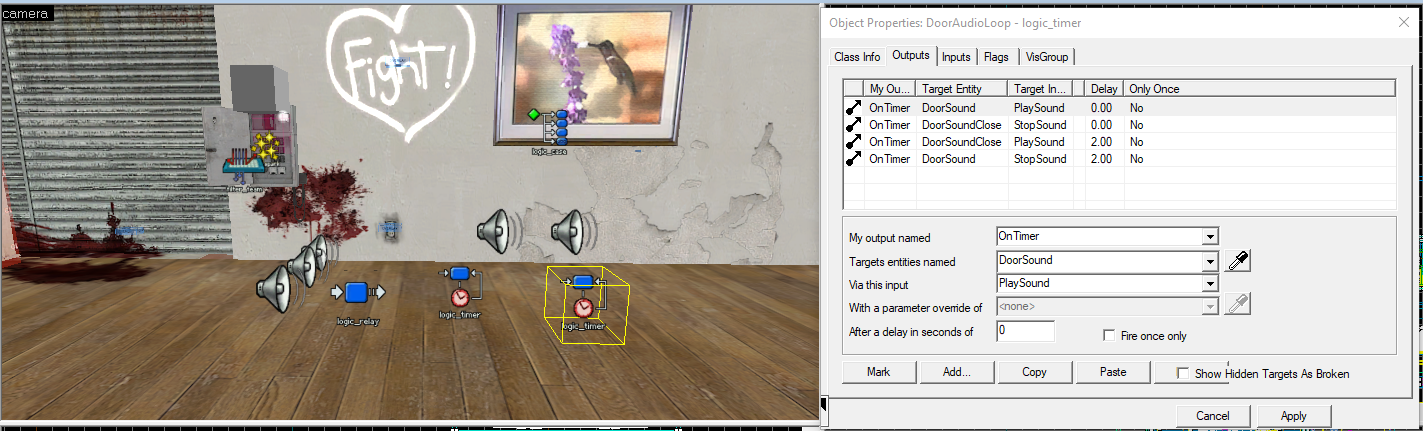
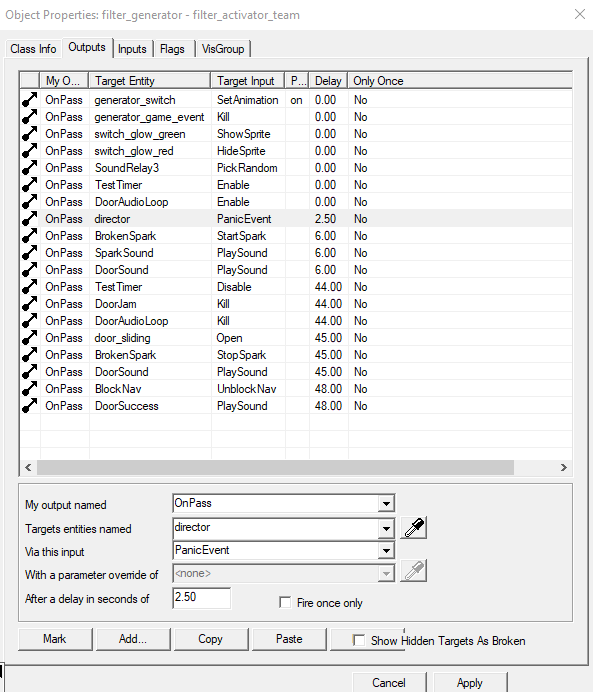
- The intent for the panic event was to have survivors activate a locked security gate to exit the department store.
- In the end the gate event was given multiple means of conveyance based on playtests from each milestone
- The gate starts moving with sound when player presses button
- The control box begins sparking when the gate malfunctions
- The gate jitters up and down once broken communicating the event is still running but that players must wait
- Survivors yell out to proceed once the gate stops jittering
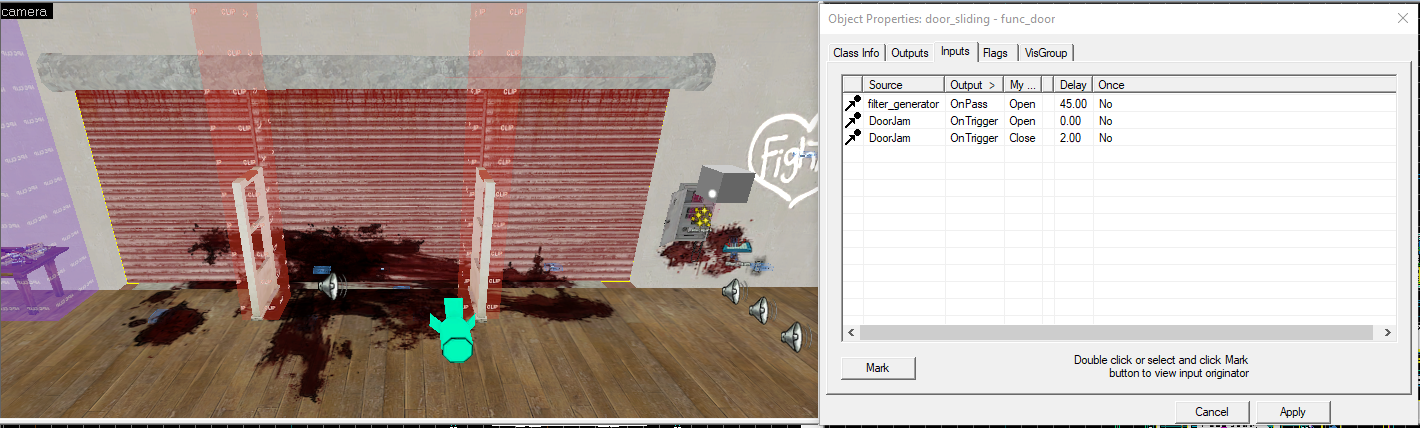

- In addition to the technical elements the layout of the panic event space was designed to increase the tension of the encounter
- Survivors are encouraged to stand in front of the gate for the nearby ammo spawns where they are attacked from both sides with no good place to hide
- The layout is designed to put teammates’ backs to each other to defend from the hoard making the encounter feel like a cinematic last stand
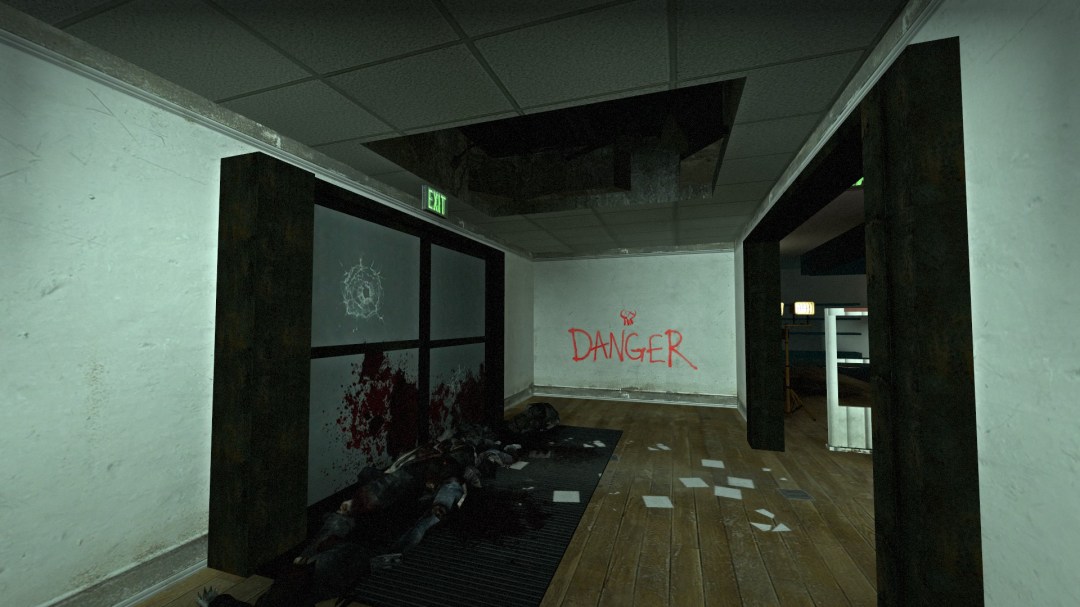
Camping Spot With Added Ceiling Hole 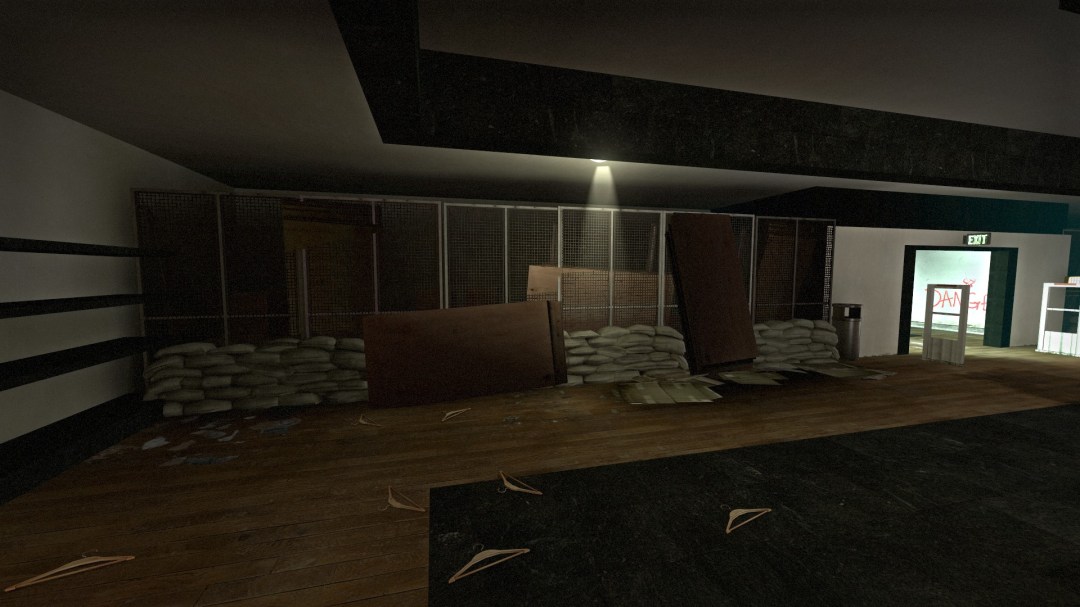
Closed Off Camping Spot 
Camping Spot with Destructible Wall
- Playtests of the panic event revealed various safe spots that players tended to camp in when the hoard was set loose transforming the cinematic last stand into a leisurely defense
- Each of these spots had their strategic benefits reduced allowing for a more dynamic standoff between the survivors and the infected
- With these changes more players approached the scenario back to back near the gate as intended
reward player exploration with clever secrets & environmental storytelling
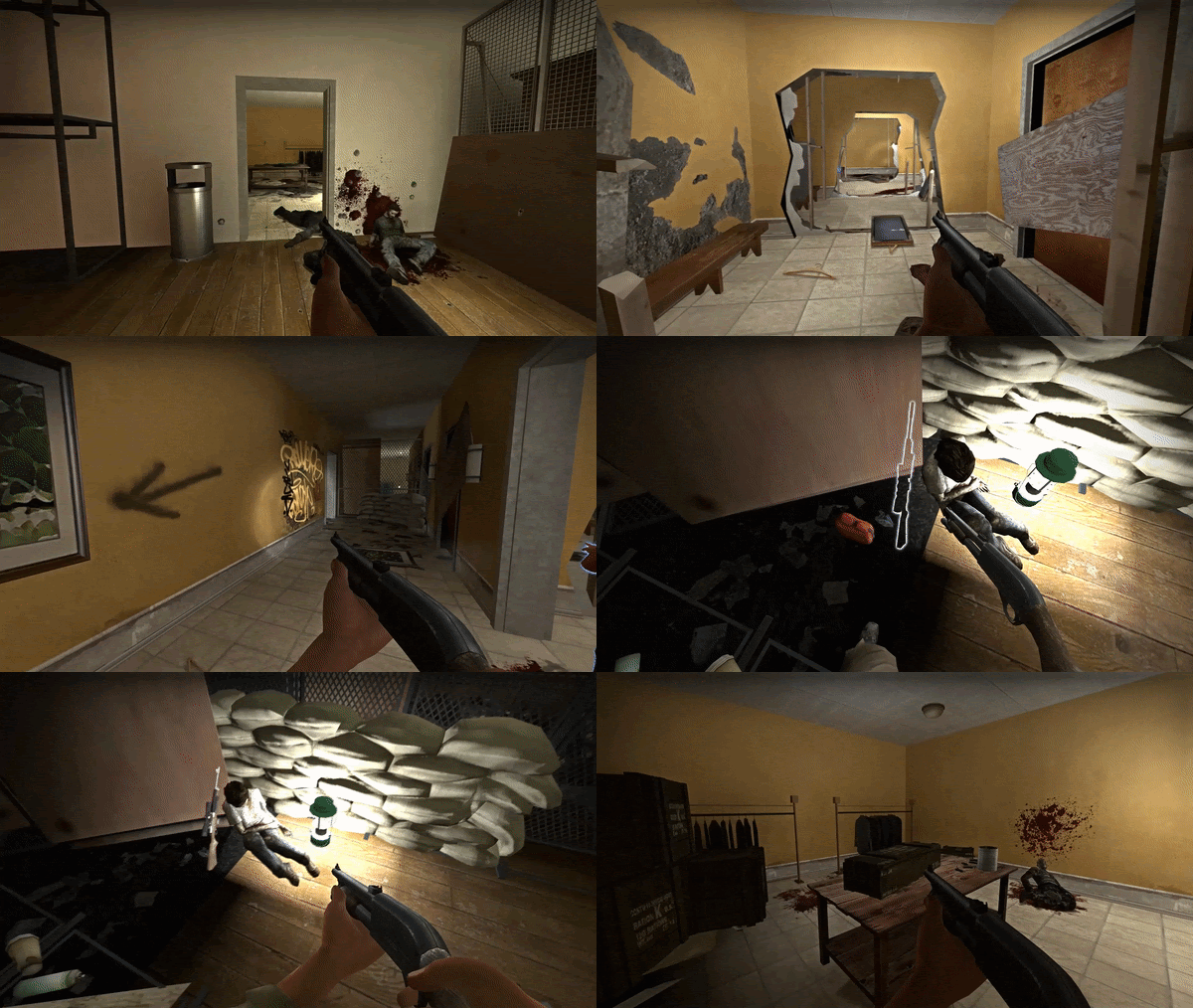
- In games like Dark Souls levels wrap back upon themselves returning players to previously seen areas from a new vantage point, often revealing a secret at the start of a zone only accessible later in the level
- The tier two weapons in the Department Store are hidden in a similar manner
- The sniper rifle can easily be missed due to the misdirection of guiding lines and decals pulling the player along the critical path
- Players who miss this moment have another chance to notice the reward further along the path through a fence making the inevitable collection more satisfying

Pump Shotgun Behind Gate at Level Start 
Pump Shotgun Access at End of Level
- The pump shotgun can be seen at the very start of the level behind security fencing, made clear with nearby sparks and a conspicuous dangling corpse
- At the end of the level, players with a strong mental map of the space will realize themselves to be at the other side of the initial fencing, their strong observation skills being rewarded with one of the best weapons in the game a level early

Crushed Infected 
Infected Mannequin 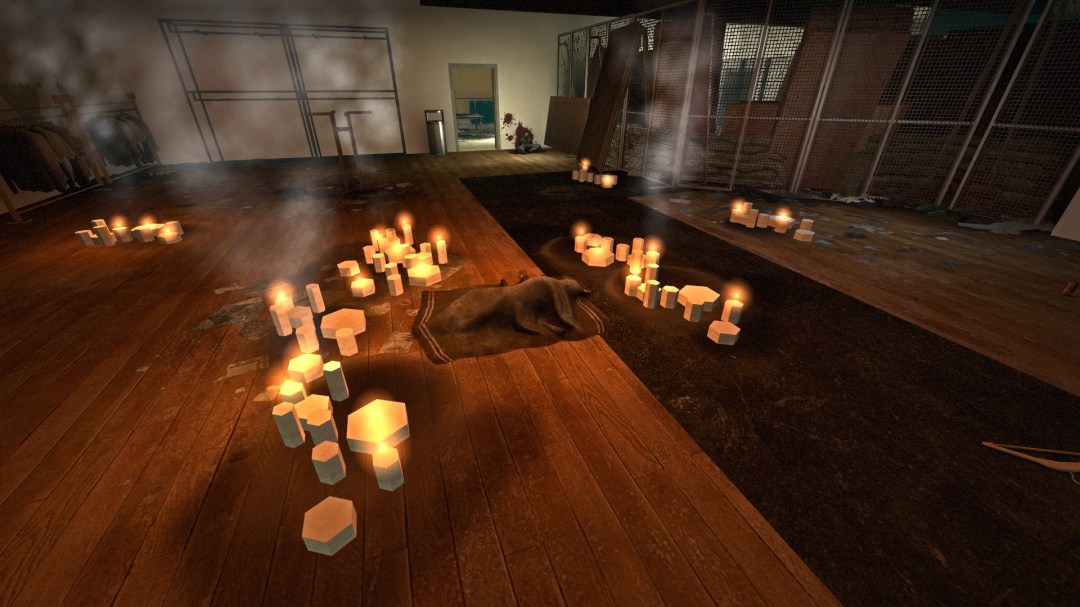
Funeral Service 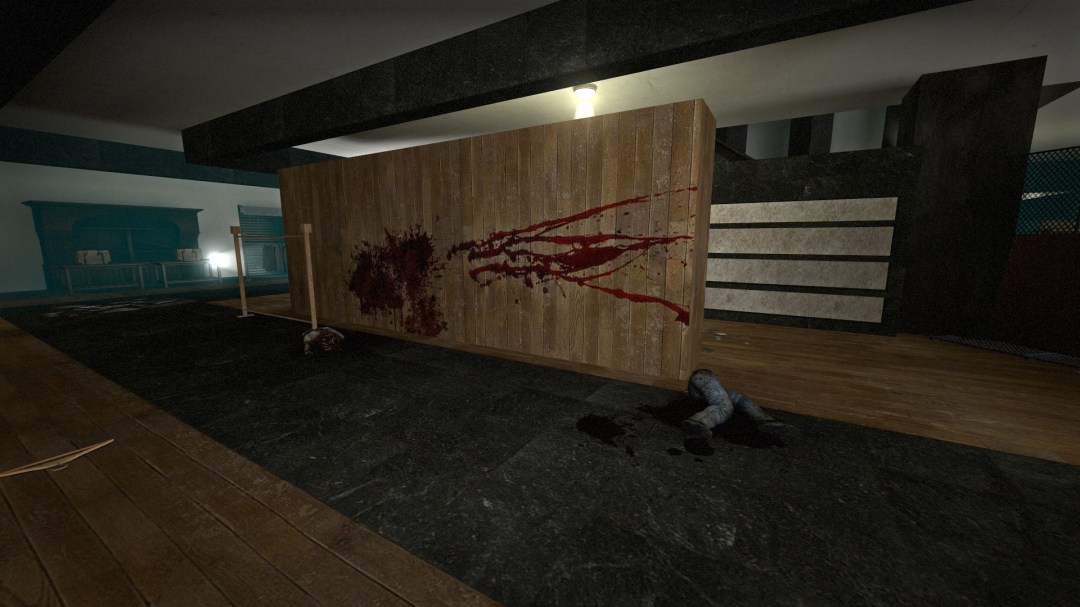
Cutting Prices in Half
- Observation reveals not only secret rewards but also environmental stories hidden throughout the store that can help piece together the history of the location
- Trapped survivors, sprung zombie traps, and a military unit’s last stand call all be pieced together by watchful players, each corner of the map designed to hold a surprise
playthroughs
Mall of the dead campaign playthrough
post mortem
what went well
- Acting as campaign producer organizing deadlines, builds, submissions kept team of designers on track
- Team communication was consistently strong, focused on thematic and gameplay consistency
- Designing and polishing Department Store flow, scripting, and aesthetics taught a lot about the hammer editor
- Navmesh knowledge improved at every milestone for increasingly intense gameplay
what went wrong
- Delayed testing during most milestones left unnecessary bugs in the campaign
- Linking levels together early in the project took many extra man hours to debug
- Sight blocking in a single open building required more aesthetics and flow changes than anticipated in planning
- Making use of the lighting entities within Hammer in an interior level with few windows proved time consuming
even better if
- Moving build schedules forward in the milestone ensuring backups are ready in case critical bugs are found late in the sprint
- Initial research into Hammer before jumping headfirst into the project would have sped up some of the trial and error of learning how to script in L4D
- The Department Store flow would have been more interesting if players were taken outside into the mall for a small section. The level could have extended further past the gate section towards the end making it feel more substantial.
 Austin Merritt